Source Laser Guided Electric Fabric Scissors for Leather, Carpet, and Cloth
Compare 30 laser guided electric fabric scissors from verified suppliers. These tools support OEM customization and handle materials like leather, fabric, and carpet with options for battery or electric power sources; compare the available evidence and request quotations based on your requirements.
Key considerations
Products List




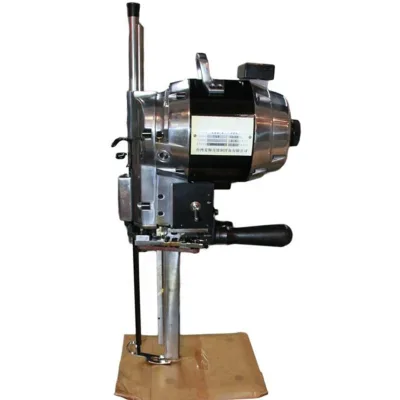
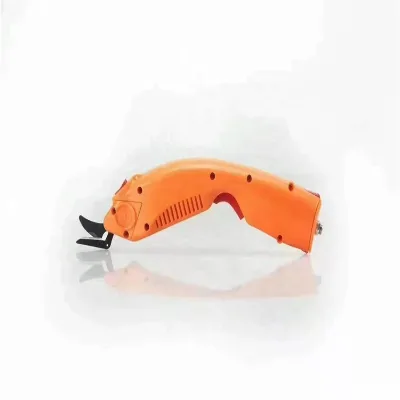

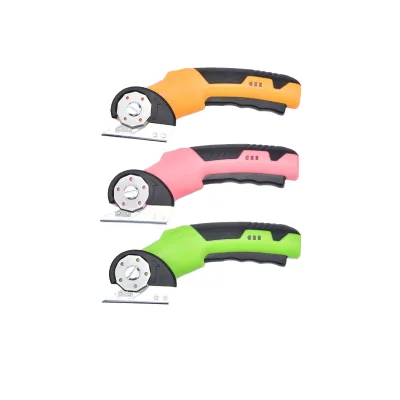


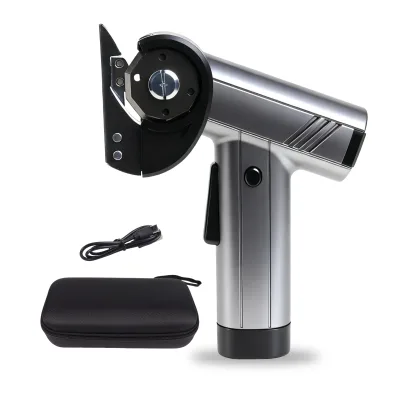
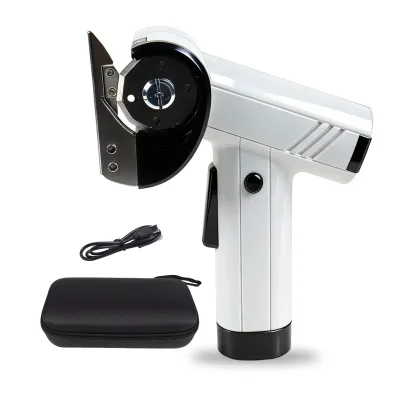
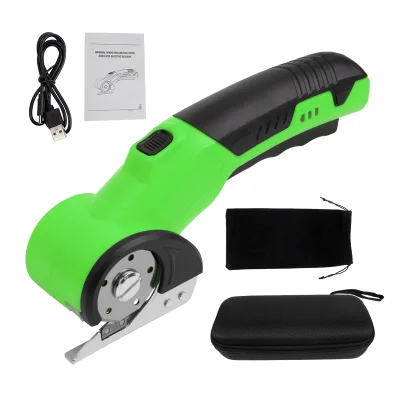
Comprehensive Sourcing Guide
Laser Guided Electric Fabric Scissors Sourcing Guide
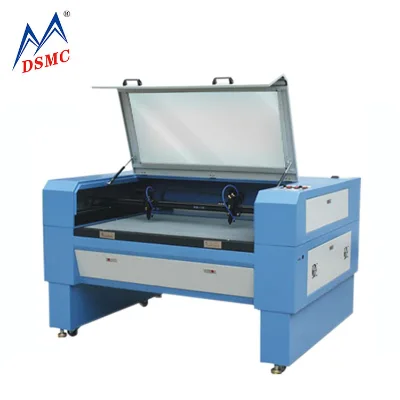
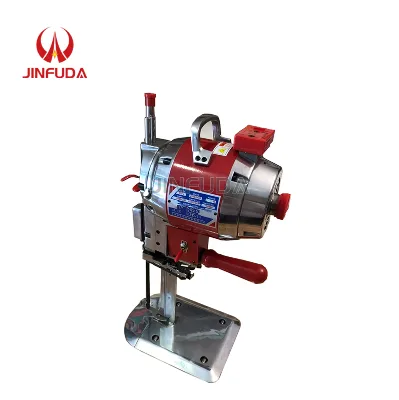
Laser guided electric fabric scissors occupy a practical niche between handheld shears and industrial cutting machines, offering buyers a powered tool that combines straight-line cutting assistance with low operator fatigue. For procurement teams, the category spans lightweight cordless models suited to retail and hobby use through more powerful bench-adjacent machines aimed at workshop production. The presence of a laser guide line is the key differentiator, since it helps operators maintain consistent cutting paths across fabric, leather, and carpet without pre-marking every line.
Before committing to a supplier, buyers should treat the category as segmented rather than uniform. Listings under this keyword range from battery-powered 3.6V handheld units to high-power 4800W electric cutters, so the first sourcing decision is defining your intended duty cycle, material mix, and end-user profile. A clear internal specification—covering voltage, power class, blade type, and color or branding requirements—will filter listings quickly and prevent mismatched samples from consuming your evaluation budget.
Product Scope and Observed Listing Signals
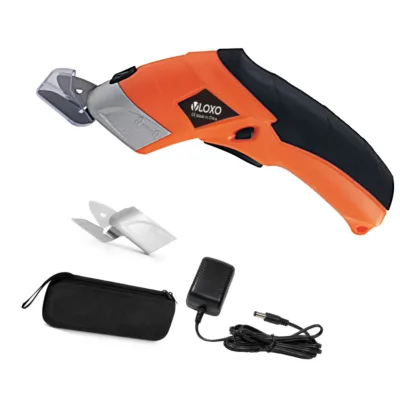
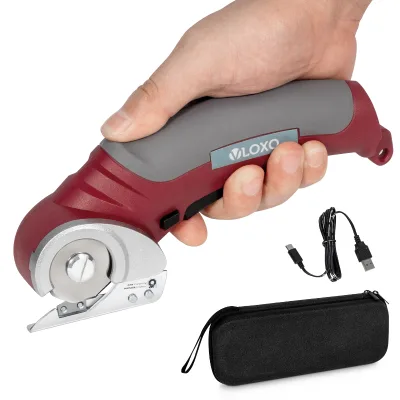
Observed listings in this category include handheld electric scissors with model designations such as LZ-001 and AT-001, branded under names like VLOXO, with applications listed for leather, fabric, carpet, cloth, and sponge-type materials. Attributes commonly shown include OEM and ODM customization support, MOQ from a single piece upward, single-item selling units, and package dimensions ranging roughly from 24×15×9 cm down to 28×11.5×5.5 cm for larger units. Color options observed include blue, pink, yellow, orange, green, and customizable finishes.
Price dispersion is wide, with observed listed prices spanning from under five dollars to several thousand dollars, reflecting the mix of consumer-grade cordless scissors and heavier industrial cutters sharing the same search space. Buyers should note that listed attributes are seller observations, not guarantees that every product satisfies them; verify each claim—weight figures of 0.5 kg to 1.5 kg, semi-automatic automation class, straight-knife blade shape—against actual samples and technical datasheets before treating any listing as representative of your intended purchase.
Technical Specifications to Verify
Power and electrical parameters deserve first scrutiny. Listings show both 3.6V battery-powered units and 220V–240V mains models at 50–60Hz, with power ratings spanning 60W to 4800W. Confirm which regime matches your market's electrical standards and your intended cutting intensity. Brushed motor type is indicated in some listings; ask about expected motor life and whether brush replacement or service support is available. Battery-powered models require clarity on cell chemistry, charging time, runtime per charge, and whether batteries are replaceable or proprietary.
Cutting capability should be validated against your actual materials. Listings cite stainless steel cutting components and applications across leather, fabric, carpet, and sponge, but layer thickness, cutting speed, and blade durability vary substantially between a 60W handheld unit and a high-power cutter. Request material test cuts on your own fabric stack before ordering. Also verify physical ergonomics—listed dimensions of roughly 17×5 cm for handheld units—and confirm weight claims, since listed weights of 0.5 kg and 1.5 kg imply very different user experiences in prolonged operation.
Compliance and Safety Documentation
Certification signals in observed listings include CE marks and CE certificate claims, which is a reasonable starting point for European market access but should never be accepted at face value. Request the actual declaration of conformity, the notified body or self-declaration basis, and test reports covering electromagnetic compatibility and low-voltage safety appropriate to the product's power class. For battery-powered models, ask specifically about battery transport and safety documentation, since lithium cells carry additional regulatory obligations in many destination markets.
Beyond CE, determine what your destination market actually requires: electrical safety marks, battery shipping classifications, and any toy-adjacent restrictions if your distribution channel reaches households. Buyers importing into the United States should clarify which UL or ETL pathway, if any, the supplier can support, without assuming that any certification exists until documentation is produced. Keep copies of all certificates linked to specific model numbers—LZ-001, AT-001, or your own OEM model references—because rebranded or customized units may not inherit the certification status of the original listing.
Cost Drivers and Commercial Terms
Observed pricing in this category ranges from roughly $4.66 for entry units to $15,000 at the top of the listing range, so your bill of materials is the primary cost lever. Key drivers include motor type, battery inclusion, blade material (stainless steel versus alternatives), housing material (plastic plus metal combinations are listed), laser module inclusion, and packaging. Customization—OEM, ODM, or OBM—typically affects unit cost through tooling, branding, and custom packaging, and listings indicate customized packing is available from some sellers.
Commercial terms require equal attention. MOQs in observed listings span 1 piece to 1,000 pieces, which means you can often begin with sample quantities before scaling; negotiate a staged commitment rather than a single large order. Clarify incoterms, payment structure, warranty handling (a one-year warranty is listed on some products), and who bears freight for replacement units. For high-value industrial models, confirm what the listed price includes—blades, chargers, guides, spare parts—because accessory omissions materially change landed cost and downstream support expenses.
Supplier Qualification and Quality Control
Qualify suppliers against your specification rather than their listing claims. Start with a documented request for quotation that states your required voltage, power class, materials to be cut, certification needs, and customization scope, then evaluate which suppliers respond with coherent technical answers. Verify manufacturing location details—Guangdong, China is listed as a place of origin on some products—through a factory audit or third-party inspection, particularly for high-power units where assembly quality directly affects safety.
Quality control should be built into the purchase order, not assumed. Define incoming inspection criteria covering motor function, laser alignment accuracy, blade fit, switch durability, and packaging integrity, and agree on an acceptable quality limit before production begins. For customized orders, require a pre-production sample signed off in writing. Insist that production units match the approved sample for color, weight, and markings. Finally, confirm the supplier's process for handling defects discovered after shipment, including spare-part availability for blades and batteries, which are the consumable components most likely to generate service demand.
Long-Term Procurement Checks
Plan for the product lifecycle beyond the first order. Consumables dominate long-term satisfaction in this category: blades dull with use, batteries degrade, and laser modules can drift out of alignment. Establish a spare-parts schedule with your supplier, including per-unit pricing and availability commitments for blades, chargers, and battery packs compatible with your chosen model. Confirm whether your OEM branding extends to spare parts and manuals, since mismatched replacement components erode end-user trust in your brand.
Reassess the supplier relationship at defined intervals. Track defect rates, warranty claim volumes, and on-time delivery performance across orders, and use this data in periodic commercial reviews. Maintain a qualified second source for your finalized specification so a single factory disruption does not halt your supply, even if the second source initially supplies only a minority share. Finally, monitor regulatory changes in your destination markets—especially anything affecting battery-powered tools—so that certification updates are budgeted before they become shipment blockers. Long-term procurement success in this category depends less on the initial unit price than on service continuity and documented quality consistency.
FAQs
What materials can laser guided electric fabric scissors cut?
These scissors are designed to cut leather, fabric, and carpet efficiently. The stainless steel blades ensure durability for various textile types. Users should verify specific material thickness limits before operation to maintain blade longevity and ensure clean, precise cuts for professional results.
What is the power source for these electric scissors?
The device operates on a 3.6V battery power source, providing portable usage without constant electrical connection. This battery setup allows for flexible cutting in different environments. Users should ensure the battery is fully charged before starting work to maintain consistent cutting performance throughout the session.
What certification do these electric scissors hold?
The product holds a CE Certificate, indicating compliance with European health, safety, and environmental protection standards. This certification is essential for buyers importing into regulated markets. It confirms the device meets required safety protocols for electrical tools used in industrial and DIY applications.
Can buyers request OEM customization for these scissors?
Yes, OEM customization is supported for these electric scissors. Buyers can request specific branding or design modifications to match their business needs. This service allows for tailored product presentation, ensuring the final item aligns with the buyer's brand identity and specific operational requirements.
What is the minimum order quantity for these scissors?
The minimum order quantity is 1 piece, allowing for flexible purchasing options. This low MOQ is suitable for testing product quality or small-scale operations. Buyers can start with a single unit to evaluate performance before committing to larger bulk orders for their production lines.
What is the weight of the electric scissors?
The scissors weigh approximately 1.5kg, providing a balance between portability and stability. This weight is manageable for extended use without causing excessive fatigue. The single gross weight is 1.000 kg, which helps in calculating shipping costs and handling requirements for logistics.
What is the warranty period for these scissors?
The product comes with a 1-year warranty, covering manufacturing defects and performance issues. This warranty provides buyers with confidence in the product's durability. Buyers should retain proof of purchase to facilitate any necessary claims or replacements within the specified warranty period.